Thursday, June 10, 2010

Shoring up the woodshed middle wall

Remember last year when I built a wall in the middle of the woodshed? If not, the idea was to split it into two areas, each capable of holding two cords. This solves the problem of "rotating my stock" -- if you always add the new, green wood to the front, the oldest wood is always in the back. Like this, I put green wood on the left, while I burn the seasoned wood on the right; then when the seasoned wood's all been burned and the right side is clear, I start putting green wood there, and burn the wood on the left, which is now seasoned. I even have a little spinning indicator that's green on one end to show which side is green wood.

As of the end of the recently completed burning season, virtually all the seasoned wood was used up, except for a tiny amount of very light pine. I've put a tiny bit of new cutting in there this year, but very, very little for now. Haven't had time to do much cutting yet this year, and with all the travel still planned, probably won't do that much. So the left side's likely to stay empty until we get a consignment of cordwood later in the season to stack there.

A problem was arising, though. Having all that weight leaning on one side of the wall but nothing on the other was causing a lot of strain on the fairly feeble bracing I used at the top to try to hook it up to the overhead trusses. The fix was pretty easy to do, though. It's not pretty, but it works.


I just nailed up two blocks on the left wall, and cut a two-by-four to length, then wedged it in. I tapped it with a hammer upwards on the right end until it was about level, thus gradually nudging the wall back to vertical. Then I nailed it in. I put in a brace on the right side too, just to prepare for the day when the left side's full and the right side's empty.

The blocks I used to affix it are a bit clumsy because the end of the wall didn't neatly line up with the stud opposite it, but the pressure on the wall won't be pushing against them, in fact it'll be pushing into them, so it shouldn't be a problem. They were mostly to just hold things in place long enough for me to affix the two-by-four.

Wednesday, June 09, 2010

Kidney stone, redux

Monday night I had an abrupt onset kidney stone. It starts as a pain in the lower back, a bit to the right, that feels like you just pulled a muscle the wrong way or slept wrong; however, no amount of twisting or stretching seems to help, and no position is more comfortable. Almost immediately it's accompanied by a sense of pressure in the bowels that turns into nausea and vomiting. The previous time I had one, a year and a half ago, it took hours to pass through those stages to intense pain, but this time it was less than an hour, and we were off to the hospital.

Instead of just being nauseated, I actually had to carry around a bucket. I also got chills, probably from the pain, as we arrived. Turns out visibly shivering and then urgently needing an emesis bucket is perhaps a good way to get a triage nurse to get you into a room immediately. Or maybe it was just luck of someone being available. Last time, it took more than an hour to get into a room; this time, less than three minutes.

As always the folks at CVH take excellent care. The first nurse had trouble getting an IV into the back of my hands, but the second one had no trouble hitting my arms, where I practically have spigots. The pain was going in waves by that point, cresting at an 8 or 9 on the pain scale for ten minutes, then subsiding to a 4 or 5 for ten minutes. The spikes were often accompanied by bringing up bile. Thankfully I hadn't gotten to eat dinner since it would have made that process a lot nastier.

Last time, whatever pain killer they gave me had me out like a light. Then again, that might be because it hit me in the middle of the night so I'd lost a lot of sleep. This time I only dozed off briefly at most. Then the doctor talked about the results of the CT scan, told me it was about 3mm (he had to draw a dot on my bedsheets because most people probably don't know what 3mm is!) and we talked through what would happen. Then I had scrips and was out of there. They didn't ask me to urinate through a filter to catch the stone for analysis; apparently if you had a calcium one once, it's virtually always a calcium one again, so it's not worth the cost of testing.

Some time since, the stone must have advanced to my bladder since all I have left now is a mild soreness in the area where the pain was, perhaps a remnant of everything being sore from the struggle of the day it hit. It's mild enough now that I can forget I have it until I take a deep breath. The only other lingering effect is tiredness. When the stone moves through the last stages to leaving, that might hurt, or it might happen unnoticed (I wouldn't've noticed last time if not for the filter catching the stone). Heck, I might already have done it.

Last time, after finding it was a calcium stone, I went off taking quite so much calcium as supplements, but later on they told me to go back on, and I did. Now I need to be more insistent. If my calcium levels really need that much supplementation, maybe there's another form to take it in that will be absorbed more efficiently, or less likely to result in kidney stones. Maybe last time they didn't let me go off it just because they figured it was coincidence (I am of the age when people get these), but two within two years after never having had any seems too suspicious.

Tuesday, June 08, 2010

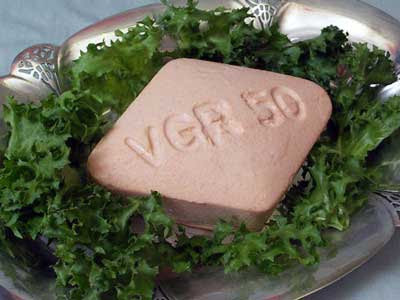
Why is Viagra spam profitable?

When it comes to advertising, the art is far from an exact science. Big companies spend millions on advertising, and big companies don't usually spend millions without good cause. And yet, perhaps surprisingly, no one can ever really be sure how much a particular advertising campaign is doing, because it's nigh-impossible to separate its effect from other things going on in the market. There simply aren't control groups. But there are some approximations -- advertising in one town and not in another comparable one far away -- that have convinced companies it's worth pouring money into advertising.

A lot of those analyses fall apart when you look at spam. Once you get into the spammer market, the costs to continue in it are minimal. The whole problem with spam is that even the nominal costs of printing and postage, or other distribution methods, which normally put some kind of cap on how much advertisers can blanket a market, don't apply. Almost all the cost of email is paid by the receiver, not the sender. But there is some cost, so there has to be some revenue to make up for it. You don't need to get one out of a hundred, or a thousand, or maybe even a million, to catch up, but you do need some.

So who the heck is responding to the endless parade of Viagra spam? Do those spams actually even contain enough information to purchase from them if you wanted to? How are these people staying in business? It boggles the mind to imagine that someone, somewhere, is getting the ten-thousandth of those spams today and this time is going to say "Hmm, I wonder," and follow a link somewhere in there, and instead of getting malware (or more likely, in addition), he gets to a form where he actually enters his credit card information. (I have to assume the odds that there's actually Viagra purchased are slim even at this point; more likely, he's signing up for credit card fraud or identity theft, which are probably more profitable. But some of them actually go to Viagra sales somehow.)

If only we could stop there being another him today, the spam itself would dry up.

Monday, June 07, 2010

Iron Man 2

I am largely unfamiliar with the Marvel comics about Iron Man, so there were a few moments where I felt like they were making a joke I wasn't expected to get, but only a few. By and large I felt just fine appreciating this movie within the franchise only, without worrying about the comics.

And I appreciated it greatly. Often, the second movie in a superhero series is the weakest, in part because the "character origin" story is usually the most compelling part. But this movie pretty much entirely lives up to the previous.

It picks up from the situation that the last one ended on, and rather than recoiling from its implications, it revels in them and milks them for all they're worth. They give us a lot of great opportunities to see the same conflicts and struggles -- Tony being far too much Tony, the people around him trying to deal with his excesses, the struggles for discovering and perfecting things, and the plot twists. But they gave a new spin to them.

It's true that the story is a little more scattered in places, notably in Tony's personal arc, which seems to be split between several storylines that are only tangentially related. On the other hand, the first movie's story is scattered in other places. I particularly felt that the final battle in the first movie felt a little disjointed, and weakened the movie's arc; no such problem here, the final battles were both coherent and exciting. Overall, the part of the movie that dwells on the opposition felt stronger this time than last time.

The casting of Sam Rockwell as Justin Hammer was the shining light that elevated the entire movie, and Sam stole every scene he was in, except for a few against Downey, and even then only because the script kept him from doing so. I sure hope Hammer's story continues in future movies.

By contrast, Don Cheadle, taking over for Terrence Howard, seemed flat, and hardly worth the change of actor. (Though they winked at the audience about the recasting during Don's first appearance, which was amusing.) I don't blame the actor; while his character had more to do in this movie, the actor had less to do. But Don did play down what he did get to work with, too.

The scenes featuring SHIELD, building no doubt towards some future story arc (whether in an Iron Man movie or an Avengers movie), felt a bit forced. They didn't really belong in this movie, they served little purpose but setting something future up, without fitting in. The only exception is Scarlett Johansson's character, who was dreadfully underutilized -- more's the pity, because some of her action sequences were probably the best in the whole movie. (I say "probably" because the cinematography, as usual, prevented us from getting a really good look.)

Some people dislike Gwyneth Paltrow, either generally, or in this specific role, but I don't see why. My only dislike is that she seems obligated to be put in peril at least once a movie so she can be rescued, even if she also makes clear it's not because of some innate frailty, but just the dumb luck and the circumstances of her life. I really like how she plays Pepper Potts, even if the role is pretty small.

The comedy in this movie didn't quite come off as solid as in the previous one, in some ways reflecting Tony himself going into a darker place in his life. But there's still enough to keep the movie flowing, and still more than one usually sees in superhero movies, all of it still feeling quite organic.

If you liked the first movie, this one might not quite live up to it entirely, but it's fairly close, and definitely worth seeing in the theater.

Sunday, June 06, 2010

Prince of Persia: The Sands of Time

First off, I should note that I never played the video game, and if there were allusions or references, I didn't get them. Nor did I feel like I was missing them. There weren't really any moments where something made no sense or felt like I was on the outside of an inside joke.

Overall, the movie was about what you'd expect: good fun, good action, and not much depth. The story, characters, and set pieces all felt like a melange of bits from other movies. Lots of characters and story elements felt like they matched up one-for-one with things from Star Wars, to the point that at a few moments I recited in my head the line that someone said at that point in "the original" and the line that followed was very similar. There were also many scenes that put me in mind of Raiders of the Lost Ark, and other bits reminiscent of dozens of other movies. But lest this seem too harsh, it was never distracting, never really came off derivative; it was more like a pastiche, so you could either not notice the similarities, or if you did, they came off as appreciative.

On the downside, far too much of the action followed Hollywood's long-standing crush on the shakycam, the extreme close-up, and other methods of making sure that the poor, hard-working fight choreographer goes unappreciated since you can't really see the fight. In keeping with the video game's history as a platform game, Dastan does a lot of acrobatic jumping, and Jake Gyllenhall trained in parkour for the movie, but we often don't get to see the stunts very well either -- the shortish sequence in Casino Royale showed parkour better than the many longer sequences in Prince of Persia due to the cinematography.

There was also some editing that seemed jerky, particularly near the end. To avoid spoilers I won't say which scenes I mean, but there are two right at the very end that both seemed rushed, with things happening far too fast for their dramatic importance. Maybe that's just how I felt, though.

The acting and casting were solid throughout. Sure, Jake Gyllenhall doesn't look very Arabic, and one can't help wonder what someone like Naveen Andrews might have done, but you're really not going to be worried about that. Gemma Arterton doesn't look very Arabic either but I, for one, didn't mind seeing her one bit. (She was certainly better used here than in Clash of the Titans.) No one's acting stood out, but everyone's was solid.

The male and female leads had the obligatory love-hate relationship, with interleaved bickering, moon-eyes, treachery, almost-kissing, and more bickering. Often, when you see that storyline done, it's perfunctory and uninspired, and in a movie like this you expect it to be paint-by-numbers, but it's done really well, largely to the credit of the actors. Doesn't hurt that the dialogue didn't come across as the characters just being sassy because of being sassy, but because of having real reasons to believe and act as they did. (Even if Tasmina tended to describe so many things as "sacred" one expected her to start going on about how her breakfast cereal was sacred after a while. In another life she'd be a Minbari.)

If you want some light entertainment to eat popcorn to, this is a great choice. It's probably one of those movies that you'll want to see on a big screen for the sake of the action sequences. It's not something that'll take up residence in your mind though.

Saturday, June 05, 2010

Going to the UK

In a few weeks we're going to the United Kingdom for a week. I have to say that to myself a few times because this trip has been over the horizon for so long that I have to start making myself think of it as something that's coming soon, and therefore, something about which I have to start thinking in terms of details like "what am I bringing?" and "what do I have to be getting ready now?"

The main thing I have to be getting ready now is a tuxedo. One of the things I'm doing on the trip is being best man at a wedding, and that means a tuxedo rental. I've never rented clothes before and had no idea how long it takes. Fortunately, my instinct to go in way early saved me because way early is exactly right -- in fact, if I'd put it off any longer it might not have been ready in time, or at least not without paying "rush" prices. Some of that is because I'm hard to fit because of my size and shape, and some is because it's the height of both prom and wedding season, but most of it is just because that's how long it takes.

I had a partial fitting on Thursday afternoon and will get a final fitting on Tuesday morning. Turns out I'm also taking my responsibility as best man -- making sure the groom arrives prepared -- the next step by harassing him about it and then forcing him to go with me to his fitting. It'll be like a scene from a romantic comedy, hopefully with fewer wacky hijinks.

What else has to be prepared? We already have a budget and a flight itinerary since Siobhan took care of that, but we will soon need to get a more solid idea -- or maybe just I need to -- of what we'll be doing on each day, because that'll inform what we're bringing. We just learned that the flat we're renting won't have Internet (!) so I'm not sure what arrangements I'll need to make to get through the time without Internet access. If we're going to be out all day, hardly seems worth bringing a computer just to lug it a few blocks to a cybercafé if I'm going to be too tired to spend much time there anyway. So this, like most things, depends more on what we're doing, and how much of our time it will take up.

I guess this weekend if I can find time I'll go over the schedule. It might be tricky, we're going to see not one but two movies today, plus shopping.

Friday, June 04, 2010

Older person, newer interests

One interesting thing about Facebook letting me catch up with people I haven't known since high school or college is the chance to see which ones have developed new interests in hobbies since I knew them then. Some seem to be into the same things as I would have guessed (or their Facebook feed doesn't reveal much about what they're into, at least once I've blocked all those timesink-games), but a few have strikingly different new interests.

For instance, one friend now posts very often about his interest in wild mushrooms. I don't even remember if he liked mushrooms at all back when I knew him in high school and college, so if he did, it never registered as a big deal. And one time when I and another friend in our circle took a weekend class on foraging wild edibles, he chose not to participate. But now, at least once every couple of weeks I see him posting something about mushrooms, often wild ones. Another friend, when I knew him, was into roleplaying games, technology, and theater, particularly musical theater, but nowadays almost all his posts are about martial arts.

It makes me wonder how I come across. Since I use my Facebook account primarily as a place to give my blog more exposure, I probably reveal more about what's on my mind and filling my days in my profile than most people (not that I expect most people will read most of those posts!). And a lot of it is about the same things I was into back then -- roleplaying games, computers, science fiction, philosophy, music, etc. When I try to think of what might be coming across as my "unexpected obsession" the only things that jump out at me are forestry, but that's still only a half-dozen posts in a year, and home automation, which is even fewer plus seems to fit into my theme of being into geekish technology.

Am I a surprise to those who knew me back then, or pretty much what you'd've guessed?

Thursday, June 03, 2010

Musical taxonomy

I've written previously about the idea that most definitions are centers, not borders. In brief: we often get ourselves into semantic, legal, and ethical tangles by pretending definitions specify a conceptual boundary into which a thing either does or does not fit, but while this works in some places, it often doesn't work and causes problems.

Is this a car? When the choice is between a Toyota Corolla and a bicycle, the question is clear; but there are plenty of other things that lie on the borders, like a partially disassembled car, a Terrafugia Transition, an El Camino, a Trev, etc. Even the legal definitions that are promulgated by DMVs and state legislatures often fail as advances in technology create new things that the old definitions didn't account for (sometimes as an intentional attempt to sidestep legal limitations: many "smart cars" are three-wheelers for no other reason besides avoiding some of the safety requirements on cars in state laws).

In most cases, we would be better served by assuming definitions are of centers rather than borders. There's a center of the concept of a car that can be typified by something like, say, a Toyota Corolla; and the nearer something is to that, that is, the more like it that the thing is, the more we can call it a car. The point is there is no single, widely agreed upon demarcation at which things stop being cars. While we might still disagree about what is at the center, and where we stop using the word, the concept of dealing with definitions this way saves us from falling into the trap of imagining that there is, or even that there should be, agreement about these things. If your concept of "car" has its center on the Pontiac Mustang, that might differ from the person whose center is the Toyota Corolla, but not enough to cause the kind of intractable disagreements that tend to grow out of definition-based debates (like the abortion debate).

This point is central (no pun intended) to the debates about taxonomy, and crops up in the schism between cladists (who strive to make taxonomy reflect evolutionary heritage directly) and other taxonomical approaches, as well as in the splinters amongst cladists. A recent discussion about the innocuous subject of the song "Sing Sing Sing" on my Facebook page made me realize that the taxonomy of musical styles has the same considerations -- you could even argue about structural versus cladistic taxonomy (because parallel evolutions into similar styles maybe should or maybe shouldn't be grouped together). Though with music you have a big problem that biological taxonomists don't have: cross-breeding between cladistically distant parts of the taxonomy is not only common in music, it very commonly creates new forms, so you couldn't make a tree, but only a tangled, unhelpful web, if you insisted on staying cladistic.

There's a temptation, which one of the posters flirts with, to abandon the value of taxonomy entirely, but this is mostly based on the standard problem of definitions being centers but treated as borders. You can't ever make a border-based definition of what constitutes "classic rock" or "boogie woogie" that is immune to the problem of people disagreeing about whether this band or that song fits into it, because the whole approach, of defining based on borders, is flawed. However, you can certainly make a list of ten songs such that almost anyone would agree that all ten are definitely classic rock, and definitely sit near the center of what classic rock means, and thus convey accurately and usefully a definition of classic rock that isn't plagued by controversy since it doesn't focus its attention on the areas of contention.

So R&B can be divided up into its many children (whether cladistic or structural), and somewhere in that big mess of styles you will find "big band swing", which (I posited) has its center on the song "Sing Sing Sing" (I further suggested Louis Prima's performance, though a strong case has also been made for Benny Goodman's performance at Carnegie Hall). Somewhere nearby stands "boogie woogie", but I didn't agree that the Andrews Sisters singing "Boogie Woogie Bugle Boy" can be its center because boogie woogie is too big a category; "Bugle Boy" is definitely the center of one of its subdivisions, but boogie woogie seems to me to include a few styles too dissimilar to that song for it to represent them, such as some ragtime and barrelhouse music. I'm not sure what the name is for the style that that song does typify, though it's clearly at the point of intersection between boogie woogie and swing.

That's not incidental, though. That's the whole point. There's a definite style that you could identify which can be best defined by its similarity to "Boogie Woogie Bugle Boy" but which may or may not have a widely accepted name. The fact that it has a definitive center, a Platonic ideal, demonstrates that it does exist conceptually as a category. More importantly, the value of categorization itself is not limited by the fuzziness of the borders -- you just have to stop focusing on the borders.

(The question of whether naming, or as it's usually called pejoratively, "labelling," things, is inherently a destructive or limiting act, is a whole other philosophical subject about which I have written and will no doubt write again.)

Wednesday, June 02, 2010

Cheap chocolate

I recently read on IMDB that "Johnny Depp... doesn't like the taste of good chocolate -- he prefers the cheap, Easter-bunny type." (This was mentioned due to him being in both Chocolat and Charlie and the Chocolate Factory.) I gave a tiny little grin of glee because I, too, prefer cheap chocolate. Maybe not quite as far as Johnny, but pretty close. The "sweet spot" (no pun intended) for me is a Hershey bar or equivalent. (The really cheap, stale, off-brand chocolate you can get at Big Lots isn't as good, admittedly, but no more so than the expensive, premium stuff.)

Friends who have a taste for the fancy expensive chocolates all think I'm crazy. More likely, I just have far less refined senses, and can't pick up the subtle tones in those more costly candies. All those things are doing for me, since I can't taste them, is displacing the cruder, simpler tastes with something that adds nothing for me, so the chocolate ends up feeling dry and bitter.

The mystery we can probably never answer is this. Who's more lucky? Maybe my friends enjoy a Hershey bar the same way I do, and then, the $10 chocolate bars take them to levels of sensation and pleasure that I never experience, so I literally don't know what I'm missing? In that case, they're the lucky ones, and I envy them, greatly. Or maybe I get just as much pleasure from my Hershey bar as they can only get by making a special trip to a small boutique to spend $10 on one candy bar. In that case, I'm the lucky one, since I can get my jollies at any 7-Eleven for a buck.

When we talk about chocolate people are likely to assume the former, and maybe for good reason. An analogy might balance the scales. If I and a friend both had digital cameras, and mine took an AA battery while his took a special $10 lithium battery, who's got the better camera? If they take equally good pictures and run equally long, mine is clearly better. But what if his takes much better pictures and lasts far longer? Then his is probably better, even if his batteries cost ten times as much.

Short of comparing the intensity of our brainwaves (and even then having to assume equal intensities correspond to equal enjoyment, which is impossible to be sure of), I don't know how we can compare. Maybe there's someone somewhere who used to be one way, then as a side effect of some surgery or medical condition, became the other way, and who can thus compare. But even then, can we be sure the neurological change doesn't also skew his memories? Enjoyment is intractably subjective.

So I'll just enjoy that I enjoy that Hershey bar that was on sale for $1 last week, and be glad at least I'm not totally alone. There's always Johnny Depp. Maybe he'll come over and share a Hershey bar with me.

Tuesday, June 01, 2010

The oil spill and alternatives

It's good that plenty of people are re-evaluating the value of off-shore drilling in the wake of the BP oil spill disaster. It's a shame that it takes a disaster of this magnitude to get enough momentum behind it -- we always fix problems just too late, if we fix them at all -- but at least we're thinking about it in a way we have neglected, apart from isolated people making ineffectual noises.

However, the current focus on banning off-shore drilling is a very superficial response to much bigger problems. A simple ban won't really fix anything. Our need for energy is undiminished, so we can't simply close off one source without expecting to replace it with another source. That's going to drive prices up even more than us paying the bill for BP fixing this will drive them up (where else is BP going to get the money other than by charging us more?) and even that's only the start -- the energy still has to come from somewhere, price regardless. So where will it come from?

A lot of people get moon-eyed at this point and start talking about wind, solar, geothermal, and hydroelectric power. To be sure, these are promising possibilities, but people like to imagine they're ready to go, and all we lack is the will to spend the money to put them into production. The fact is, none of them are ready to produce even a fraction of our energy needs, nowhere near enough to make up for all the oil garnered from off-shore drilling.

Even with our best solar technology, the amount of acreage we'd have to cover to produce enough energy to supply a major city would be phenomenal, so big that it would start to conflict with other land use needs like cropland, wilderness, wildlife habitat, and the water cycle. If we'd been pouring more money into developing solar the last few decades, maybe we'd have practical, inexpensive solar collectors with ten times the energy-per-area capability, but we simply don't. It's the same with wind, geothermal, and hydroelectric power; plus each of these has its own set of environmental impact challenges to be addressed.

In addition, producing more energy in the form of electricity can only plug so much of our energy gap until we move more of transportation to electricity. Hybrids won't do it, and even the slow return of electric cars is only going to make a dent until we're also talking about electric trucks and airplanes. Until then, even if tomorrow I figure out cold fusion using ramen noodle packets, we're still going to need to drill for oil until we make a costly and time-consuming complete switchover of our transportation infrastructures.

Perhaps the best hope we have for an environmentally friendly power source is nuclear power, but no matter how good it is, it's always going to be tarnished with a bad name that'll make it hard to justify the expenditure. What's particularly galling is that the two real problems with current nuclear power plants (the chance of meltdown, and the waste disposal problem), though both not nearly as serious as people imagine, could be instantly resolved if we just switched to thorium. We used uranium primarly for the sake of enriching it for nuclear weapons, but if we used thorium, we'd have clean power with nearly zero environmental impact at no higher cost than uranium, with virtually no waste to dispose, and no risk of meltdown. This is by far the best solution available to us, but it gets no traction because of the unfortunate associations of the name.

Ultimately, we can't responsibly talk about shutting off one energy source without talking about either replacing it, or making big changes to do without. The latter seems very unlikely, given I have to fight with people in an office in Vermont, of all places, to turn off a light when they leave a room empty behind them. So let's talk about replacing the energy from that off-shore drilling while we talk about banning it. Let's talk about the whole circle of the problem, not just one step.

Monday, May 31, 2010

Puzzleball

Yesterday I finished the 540-piece globe puzzleball I got for Christmas (and haven't even opened up until a couple of days ago). Here are a few pictures of it in the process of being built:


And here it is, completed:

There was one piece missing in the south Pacific ocean when I took this picture, but I found it later.

As a puzzle it's interesting and challenging, but the oceans, which cover an awful lot of Earth's surface (and when you do it in globe form, it's clear it's even more than you're expecting even if you know the statistics), are inordinately hard. It would have taken me weeks if I hadn't used the numbers on the back of the pieces for some parts of the ocean. I don't think there's any way to correct for this.

Near the end it gets crazy hard to press the pieces into place because you can't get your hand inside to press against the back. I tried to make up for it a bit with a long-handled wooden spoon, but it's too clumsy to really do the job. There's an easy solution that I'm surprised the manufacturers haven't hit on. Split the puzzle into two puzzles, one per hemisphere, and have the equatorial "edge" pieces have tabs to snap into one another. Then you have all the freedom you need to work on the two halves with full access, to make sure each piece fits securely. At the end, you slip the two halves together to make a full globe. This would work with all their spherical puzzles, not just the earth globe.

Though it's kind of fragile, I can now treat the completed puzzle as a desk globe. I just need to decide where to put it.

Sunday, May 30, 2010

Modern mind-body dualism

The concepts of soulism and Cartesian mind-body dualism are so ubiquitous that all our thoughts are shaped by them. Those with even a basic grounding in philosophy will have these ideas so entrenched that, even when opposing them, they are taking on the stance of going against establishment, rallying against cultural assumptions. And most people who have no idea what I'm talking about have the ideas even deeper in their thoughts, they're just less aware of them.

But these concepts were formed at a time (almost all of human existence) where the idea of something immaterial was so vague that it was unavoidably entangled with mysticism. The soul is explicitly described as a non-physical thing, and yet, it is treated as if it were a physical thing that just happens to be made of a different sort of physical substance. It is, above all, a thing. Less so the mind of Cartesian dualism; in this concept we get halfway to the idea of what we now consider the mind to be, but only halfway. The mind may not be a physical thing, but it's still a thing.

If, somehow, we could have gotten to this point in technological history without finalizing the ideas of soulism or mind-body dualism, and we were only inventing the idea now -- or, to put it another way, if some child could somehow grow up today familiar with modern technology yet wholly innocent of culturally established memes about dualism, then invent his own philosophy -- the resulting dualism would be a thousand times more apt, because for the first time in history, there's a convenient, handy analogy that leads us in what I think is more the right direction. Just as the camera helps us understand the eye (and, if the analogy is taken too far, can lead to misimpressions), the computer can help us understand the brain. And for the first time, everyone is familiar with software, and how it exists as an ephemeral, emergent property, partially independent of yet entirely dependent upon the underlying hardware.

The intangible thing that coexists with the physical thing no longer needs to be some mystical spark, or possess inexplicable properties because of its noncorporeality. The mind is simply software: it is information, it is a particular configuration of the hardware. It is tangible in the sense that the shape of a building you built out of Legos is tangible, and intangible in the sense that those same Legos can be taken apart and built into an airplane, and where is the house now? The mystery is not nearly so mysterious now that we all have in our pockets a six-ounce, $100 bit of metal and plastic that can do the same transcendent mystery as the mind in the brain.

What kind of philosophy would we create if we had this far clearer, much less misleading analogy to start from? To be sure, it would lead us to other spurious conclusions, but I tend to think far less of them, and not as grievous.

Saturday, May 29, 2010

Surrogates

The reviews of Surrogates were largely negative, and I can see why, but they're mostly a matter of expectations calibration. (Minor spoilers ahead, but they really won't impact your appreciation of the movie, they're all things you'll see coming, particularly if you've seen the trailer which gives away the final scene.)

The premise of the movie is that everyone lives through robotic surrogates that look just like people, and which they remotely control from a "stim-chair" back in the safety of their home. This is a fascinating premise in a lot of ways. The many ways this would be used, the benefits and disadvantages, the impact on society, the whys and wherefores of how it could come to be this way (and why the inefficency, compared to a simulated world, makes perfect sense), are ripe for exploration.

That's where the movie falls down, though. Apart from a few throwaway lines and plot points, none of that is explored. We do have one person trying on a body of the opposite gender, and a few people using "enhanced" bodies, but by and large, everyone just looks like themselves, only better-looking and in better shape, and everyone can do the same things they would normally do, only with better endurance and less worry about injury.

A few issues of the threats implicit in this possibility are glossed over. There's a casually tossed-off line about how you can't just jump into someone else's surrogate because they have to be carefully matched to your nervous system -- and then this gets ignored pretty much from then on. The communications between surrogate and stim-chair aren't even encrypted, and all route through a single central switchboard that can tap into or override them at will -- we take more precautions than that with email. Even the central threat -- a weapon that scrambles a surrogate so thoroughly it also scrambles the human behind it -- is glossed over.

Ultimately what we have as fairly serviceable action/suspense movie that only takes its "hook" as far as it needs to to get you to notice it, and then ignores it thenceforth. There's good production values, lots of scenery for Bruce Willis to chew up, a smattering of good action, and enough plot to keep you working it out in your head -- not because you won't see the twists coming like a freight train at night in a cornfield, but because you will need to at least keep a scorecard.

The one place that they do dig up the premise is to make begging-the-question "arguments" about how this technology sucks the humanity out of humanity. They do this by simply presenting it as a fait accompli: a few people have used it to escape from things they should be facing, or find it's "not for them", and while lip service is paid to the good side (the virtual elimination of disease, death due to injury, and most prejudice based on bodies; vast reduction in crime; restoring full functionality to the disabled; and more), ultimately this is all deemed unimportant compared to a few people feeling less alive instead of more alive this way, and some blurry first-year-liberal-arts-major sentimentality.

Compare this movie to Strange Days and it will make you ache, because Strange Days does better as an action movie, and as a mystery, and as a character piece, and still manages to find time to give its similarly-scoped central premise a really thorough workout and exploration, finding both the good and bad uses. (It's hard to avoid the comparison when both movies feature a dreadlocked, black cult-of-personality character who is the de facto leader of an insurrection against the current order of society, too).

So in the end Surrogates is barely a tenth of the movie it could have been, if they'd really spent any thought on their premise, or given it a fairer, less dismissive analysis. But the movie it is, is okay for filling up a few idle hours when you're not looking for much. Expect that, instead of what the ads want you to think the movie is, and you'll be fine.

Friday, May 28, 2010

How would an implant computer change my life?

I'm still very ready for an implant computer. And for just about every step between what I have now and that. But it's hard to make really complete and accurate predictions about how such a thing would really change our lives. Most predictions of the impact of technology on the future make the mistake of taking what we would use it for in today's environment and projecting that onto tomorrow, rather than considering how that act also changes the environment itself. Ask someone in 1980 what Google would do to the world and you'd be likely to get answers focused on how to use Google to solve 1980's problems, but nothing about the many ways ubiquitous access to robust search has changed the kind of things we do, not just the way we can do them. And implant computers would be like that ten times as much.

My first reaction is to think of doing the things I do now, but more ubiquitously, and more efficiently. So instead of wondering something, I could look it up, no matter what I was doing or where. Not just because I was curious ("who was that in that movie?" still comes up while driving down the highway...) but whenever I need information to do whatever I'm doing (imagine how much easier travel would be with ubiquitous access to maps, GPS, flight time updates, restaurant reviews, and my calendar, right in my brain). Instead of trying to remember to do something, I could make a note right then, as easy as thinking; or just do it, depending on the task and my circumstances. I could fill in all those vacant times, like riding in the car or waiting for people, with writing, coding, exercising, or doing any number of other things that don't use up my mind.

See how I'm just doing what I do with technology today, but in more times and places, and with some inconveniences (like having to use a keyboard) removed? The next step then is to think of new things an implant computer would let me do. One of my favorites is HUD-style "augmented reality". Walk down the street and overlaid on my view would be information about the people and places I'm seeing. This shop has 78% positive reviews and is currently having a sale on such-and-such an item I have flagged on my wish list. That person walking towards me is identified by facial recognition as someone I met at a meeting last year at work, so I can respond appropriately if she greets me. As I drive, "turn left in 100 feet" is replaced by a highlight on the actual route I need to be taking, along with emphasis on important things (like stop signs and pedestrians) and de-emphasis on unimportant things (advertising signs filtered out automatically... or replaced by better advertising for those willing to pay enough for it). Anything I'm looking at, from a menu at a restaurant to a national monument, becomes a hyperlink I can drill down to find out the calorie content or historical significance (respectively, one would hope).

But I wouldn't be the only one with an implant computer. That's where things get really hard to predict. Once implant computers are in common usage, that woman is not going to be impressed that I recognized her a year later; she'll take it for granted, since she also has an implant computer and is currently looking at my Facebook page (by then, maybe Facebook will finally have figured out privacy). Would my boss expect me to be working 18 hours a day since I am "plugged in" that long? Would it be impossible to play in trivia games (or would they invent a new form of trivia to suit it)? What would advertisers be doing to try to take advantage of implant computers to make sales? How could con artists use their implant computers for cons -- since simply adapting them to the old cons would be helpful only for a little while, until we all got used to using ours to avoid those cons?

We've barely scratched the surface of ways that implant computers would change society, and we already see that the ways an implant computer are far larger than anything you'd think of by just taking what you do with a smartphone, laptop, or iPad now, and extending it by removing the keyboard and adding ubiquitous connectivity.

Thursday, May 27, 2010

Transitory to-do lists

I've got that kind of personality that is called "pathologically organized" by people who can't find their keys and forgot to pay the electric bill. I make a lot of lists. My smartphone is always, always on my person, so I can jot down additions to my various to-do lists any time something occurs to me, and so I can review what's the next thing to do.

But that's still not enough. I regularly find myself, on getting up to do something, having to make a list of items to do on this trip, summarizing each one with a word, and then repeating the string of words to myself, because it's not worth it to write them down when it's just one little trip around the house, but I will lose items otherwise. Maybe it's a sign of my advancing age, though it seems like I've been doing this for many years.

I wonder if someone would be puzzled or amused to hear me walking around saying "bug-spray helmet jacket harness gloves" over and over -- or maybe even more so for a list that fits together less well, like "charge soda load headset slippers." But if I heard someone else doing something like that, I'd just nod knowingly at the kindred spirit.

The thing is, I never do. Maybe it's just me.

Wednesday, May 26, 2010

Attitudes about curing diabetes

A recent visit to the eye doctor bumped me up against the contradiction at the heart of the medical community's attitude towards diabetes.

It has been an uphill battle for doctors to get people to understand that diabetes is a chronic, lifelong condition. Most people have a vague notion that you just have to avoid sugar and take your medicine every few hours, and you're fine. Diabetes usually appears in movies as an excuse for a character to need their medicine now Now NOW NOW or they'll die! (when for the vast majority of diabetes sufferers, the only immediately life-threatening need they'll face is a need for food if they took their insulin a little while ago and then missed the planned meal).

At least, that's how it was ten years ago. Nowadays, while Hollywood still insists on using diabetes as a ticking time bomb plot device, huge increases in the rate of diagnosis mean most people know someone who is diabetic and probably have picked up a little bit more about it, and lots of public education has also made a dent. People have gotten the message that diabetes requires a lifetime of care. There's more awareness of being "prediabetic" (which is often a euphemism, sometimes for "you're diabetic, but we think you'll be better motivated to take care of it if we call it this instead", and sometimes for "you need to eat better and exercise more, and this is a way to strike some fear into you"). And this public education also includes educating the medical community; while gastroenterologists might be up on these things, your GP might lag a while, and your dentist probably learns about it the same way you do.

So just about when they're getting us to take diabetes seriously and understand it, a complication arises. It turns out that there has been evidence for a few decades now that gastric bypasses can resolve -- that is, "cure" -- diabetes. This has been known for a long time but not publicized even within the medical community for the simple reason that no one really understands precisely how it works. It's also very easy to misunderstand. "Fat people get diabetes. Gastric bypass makes you lose a lot of weight. Ergo, the loss of weight is how it works." Well, no. It turns out that in the majority of cases, diabetes measures like blood sugar drop precipitously in the first few weeks after the surgery, long before there's been enough weight loss to matter (losing that same amount of weight by other means would not be expected to, and does not, lead to significant changes in blood sugar levels). Something fundamental and metabolic changes, probably something to do with the extensive nervous system around the stomach (almost as complex in scale as the brain, yet barely understood), that leads to an almost immediate resolution.

We get stuck in a bit of semantics at this point. After gastric bypass, am I "cured", or is my diabetes merely in "long-term remission"? Yes, it's possible in ten years I could become diabetic again, particularly if I find ways to regain a lot of the weight. But if I had never been previously diagnosed and someone checked me out now, my fantastically normal blood sugar levels would soundly put me into the class of "not diabetic, not even at high risk to be diabetic". I don't really have a higher risk of becoming diabetic than someone else of my current weight who hadn't been through being diabetic and having a gastric bypass -- in fact, probably less, since regaining the weight, though possible, is less likely.

The insurance companies still treat diabetes as a life-long condition, and we don't argue the point too strenuously because that makes them more likely to authorize some things that the doctors ask for, that are probably no longer needed. That's where my eye doctor's office comes in. They still want us to come in for an annual checkup, because that's standard procedure for diabetics, even though our blood sugar levels are probably better than 90% of their never-been-diabetic patients. They don't quite come out and say "no you aren't" when we refer to ourselves as "cured" but it's clear that that's how they think of it. They haven't gotten the news, or aren't convinced of it; and they treat us like we're oversimplifying or being in denial. They're very polite about it, in fact, exceedingly friendly, cheerful, and upbeat, praising us for our sugar levels, our weight loss, our exercise regimens, and the condition of our eyes (particularly mine, which remain perfect at the age of 42), but it's still there.

I guess they had to fight a long time to get people to take diabetes adequately seriously, and understanding it as a permanent condition that is, at most, "in control," was a big part of that, so they're loathe to let it go. No one wants to be the first to say "cured" officially (except the people who do the gastric bypasses, and even they are cagey about it), because of the fallout (both legal and in terms of public perception) if they end up wrong.

Yet the evidence keeps mounting. Even the ADA, which is notoriously conservative (still recommending the high-carb diet that has been proven time and again to be bad for diabetics), has come close to calling it a 'cure' by now. In the end, my blood sugar is probably lower than that of the majority of people around me, including skinny, athletic, unabashedly "healthy" people; and my risk of diabetic complications is as low as theirs, or lower. What's the real point of calling me "a diabetic in remission"? To "trick" me into exercising? Maybe for some people that works, though it's a sad commentary if it does.

Tuesday, May 25, 2010

Whatever happened, happened.

I'm fairly sure this is spoiler-free, even if you haven't watched since season one.

Since the final episode of Lost started at 9pm on a Sunday night, I couldn't watch it live, though I wanted to. Wondering how it would end kept me from getting a good night's sleep on Sunday night; I kept dreaming scripts, usually involving it crossing over with other shows or other storylines, because these are dreams and they have to involve something surrealistic and absurd.

We watched it right after work yesterday. And I can say that I am entirely satisfied. No, they didn't answer every fiddly tiny detail question, but they answered all the questions that they needed to answer. Even some of the fiddly details that we despaired about ever getting answers to, I think they're there and we're still finding them. (I read a very interesting observation about the Hanso Foundation today that provided explanation for how a lot of seasons two through four fit into the larger story, for instance.)

Some things that are not explained are intentionally not explained because they are part of the premise: the story just happens to happen in a world where things like this are true. No one asks for an explanation for why Melinda can see ghosts, or why there even are ghosts, in Ghost Whisperer: it just happens to happen in a world where there are ghosts, and some people can see them. In the same way, some properties of the Island, and some other things like what Miles can do, are just how things work in this world, and while we do get explanations for what they are and how they work, we don't get explanations for why they are this way. Compare to how much better Star Wars was when the Force was the thing which binds the universe together, to when it was some nonsense about symbiont midichlorians. (And even that didn't explain anything, just pushed the question one level deeper.)

On top of having a satisfying resolution to the mysteries, the finale also had a satisfying resolution to the plot. The conflicts were drawn into sharp focus and then resolved. The challenges were built up to a climax and the tension ratcheted up, then the payoff made it all seem like it meant something. Even more, the characters were satisfyingly resolved, with each of the people we'd cared about given a chance to find completion, with some of the most tear-jerking, and entirely sincere, moments on TV in recent memory.

During the first couple of seasons, I considered Lost a really good show, well worth watching, though if it were cancelled I wouldn't've wept. Later, as they misstepped with the season about the Others, I got close to considering dropping it, and there were episodes I didn't pay strict attention to. Later seasons cranked things right back up, including the mystery and the complexity, but even more so, the characters. The show became more important to me again, but even coming into the final season, I didn't think of it as a favorite show. A few episodes this season were fantastic, but at no point did I even consider that this could be on my favorite shows of all time list at all.

Maybe it's just the emotional impact of the final episode being so fresh, but the way it all wrapped up just tied it so tightly in a bow, it feels like it retroactively made so much of what passed on the way here so much better that I am thinking it's probably on my top ten favorite shows of all time list. I haven't actually made such a list: I only know with certainty what numbers one and two are. If I took the time to make such a list it would probably be full of moments with me musing, oh, wait, that show belongs on it too, and maybe by time I was done Lost would have fallen off the top ten contenders list entirely. But even if that's so, it's remarkable that I'm even considering it now, when a week ago, it didn't even occur to me to ask the question.

Incidentally, the fact that I was at least half right, and more right than any other person I know of, in my theory about what was going on this season, probably isn't hurting either.

Monday, May 24, 2010

Revised MAME cabinet plans

Though I started with the plans for a MAME cabinet from the Ultimate MAME site, I decided to make some significant adaptations to suit my monitor and control panel plans.

The original plans were for a cathode ray tube monitor of considerable size, actually much, much larger than original arcade game monitors. The monitor I got is a 22" HDTV with a very slender profile. It wouldn't fit the space provided in any dimension; it's a bit too narrow, a lot too short, and very very much shallower, plus it's a 16:9 instead of 4:3 aspect ratio. Hence, I used a bit of trigonometry to reduce the size while keeping the same angle.

The original plans call for building a control panel, but I intend to buy one fully assembled from MAMEroom. It's a fair bit smaller than the original plans, but since it's not built into the plans, I decided to adjust the plans to make the space where the control panel goes a little deeper to better fit it. This might need adjustment after I buy the control panel next month, but for now, the plans will fit the depth and height of the panel. (The width will stick off a bit to either side, but that's typical for MAME cabinets.)

I also reduced the width of the whole cabinet by six inches in order to better fit the width of the monitor. That way, it'll fit the monitor so that there's no space showing on either side. I might put in a bit of a bezel to frame it, but I might just leave it showing as is, since it's a pretty nice front.

Finally, since I don't need clearance for the depth of a cathode ray tube, I was able to make a significant reduction in the cabinet's depth, and simplify the shape: there's no need for the slope at the top rear anymore. The resulting cabinet is about 26" deep instead of 40" deep, but still has gobs of room for the stuff that'll go into it. It's also about 5" shorter, but that's not going to make much difference.

It should fit my components better, be a little simpler to build, take up less space, and still allow plenty of room to access the equipment. I won't start building until after I buy the control panel next month. Though I might dig out one of my old retired computers and try setting up MAME on it to see if they're up to the task, or if I need to buy a cheap computer next time one comes up on Woot.

Sunday, May 23, 2010

Bridal shower versus bachelor party

Admittedly, the bachelor party I'm planning and hosting is not your ordinary bachelor party. No scantily-clad girls will be jumping out of any cakes or dancing around any poles, and the most potent potable there will be diet Pepsi. Instead of the usual fare, we're going to play lazer tag, miniature golf, and arcade games at Pizza Putt through one of their group event plans. But all in all this is probably about the same amount of work and complexity to plan as the more traditional version.

By contrast, the bridal shower which is going on at my house later today (as of this writing, Saturday, May 22), seems like planning and carrying out an invasion. The whole preceding week has been a flurry of housecleaning and moving furniture and shopping. Between decorations, party favors, cleaning supplies, and food, we've had to do a ton of shopping for this event, and it's not even finished. There's cooking to be done, too. There were games and events to plan and prepare for. Later today, we have to move most of the living room furniture out into other rooms, and rearrange most of what's left. I'll have to take the dog out for four or five hours and find somewhere to occupy her that won't involve her going nuts or digging up anyone's yard, which means I'll have to stay on the move, most likely. And when it's all done we have to move all the furniture back.

All I have to do is set a time, make a reservation, and do a little coordinating of shared rides. Maybe when we get there I'll need to offer a bit of leadership in setting up teams and times for lazer tag, or when to eat the included pizza. I guess I got off easy.

Saturday, May 22, 2010

The last people to heat spaghetti in a pot

Microwave ovens actually date from the 1950s, but they started to become ubiquitous all at once in the 1970s, when I was quite young. Within a few years we went from where most people hadn't even heard of them, to where anyone of moderate means was trying to figure out where to put one in the kitchen, about as quickly as DVD players made their way into our houses in the 1990s.

Microwaves have been standard equipment in virtually every kitchen for about thirty years now. There are people who have owned several houses and have children who never lived in a kitchen without one.

Sometimes I wonder if they look at a can of Spaghetti-Os and wonder, why do they still sell these in metal cans, when virtually everyone who eats Spaghetti-Os is going to heat it in a microwave oven, and yet you can't put the can in the microwave. Wouldn't it make more sense to put it in plastic or something? And of course they do, but only in canisters half the size but which usually cost more, so ultimately, the metal cans (of a typical can size) still remain the largest part of their sales (I assume).

And thinking that made me realize, my generation is the last one to remember when the normal way, in fact almost the only way, to heat up Spaghetti-Os, or canned corn, or virtually anything else in a can that needed heating, was in a pot over the stove. The idea must seem almost as alien as horse-drawn buggies to people just 5-10 years younger than me. In fact, the same is true of heating up most leftovers -- which means that there are tastes that are effectively extinct now, like that unique quality that leftover spaghetti (with sauce) gets when you reheat it in a pot, and it gets a little tough, but not in a bad way -- it's kind of hard to describe, you have to try it.

I suppose that if you really look, everyone can probably find something that their generation was the last to taste or try or do, and the advent of the microwave doesn't make that more true -- just more obvious. I wonder what other transitions like that aren't so evident.